

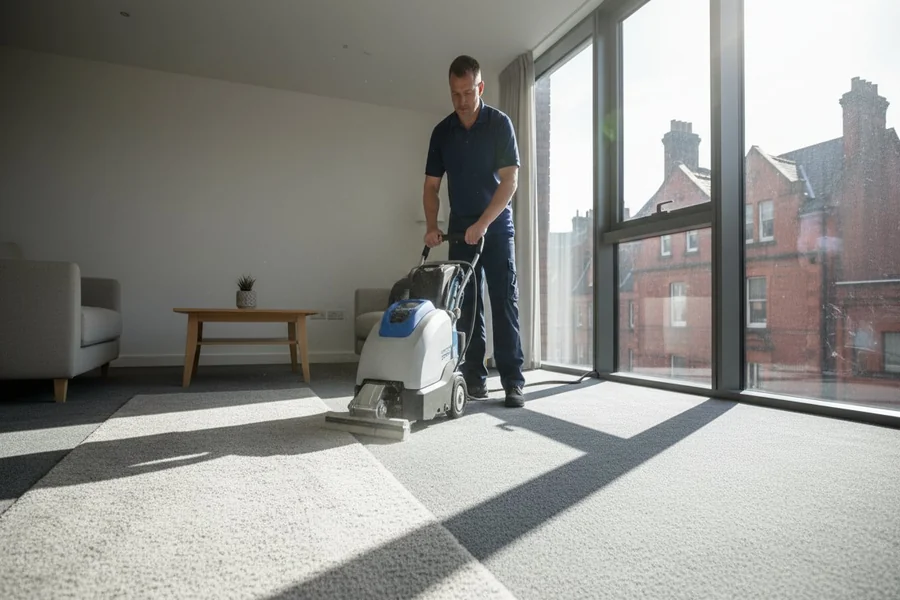
It is well-known that Manchester’s homes face a constant battle against the elements, but one of the most overlooked battlegrounds in this struggle is the carpet.
The dirt levels of carpets vary significantly depending on the age of the property, its location relative to traffic corridors, and the specific microclimate of the neighbourhood.
As indoor air quality becomes a central pillar of public health in 2026, understanding how your floor stacks up in the hygiene rankings has become really important.
Why Manchester Homes Are One of The Hardest To Keep Clean
The classic red-brick Victorian terrace is an iconic feature of Manchester’s suburbs, but while these homes are prized for their character and high ceilings, they rank among the most challenging for carpet hygiene in the entire region.
The primary issue here is the age of the construction and the permeability of the materials used over a century ago.
That’s because older properties often suffer from rising damp and water intrusion through porous brickwork, which are both significant contributors to microbial growth beneath the floorboards.
And, soiled carpeting that remains damp provides an ideal breeding ground of gram-negative bacteria and fungi. This means that carpets can easily become permanent reservoirs for mould spores that thrive in the dark, humid space between the pile and the underlay.
Beyond the moisture, the physical structure of Victorian homes often lacks the advanced infiltration barriers of modern builds.
Gaps in party-wall cavities and original timber floorboards allow for the movement of dust, soot, and particulates between levels and even between adjacent properties.
For homeowners in these districts, a carpet that hasn’t seen a professional deep clean in over is most definitely hosting a thriving population of dust mites and fungal colonies. So, if you’re wondering why you’re having problems with your allergies, this is it.
These biological pollutants are significant triggers for respiratory issues, particularly in children and the elderly who may spend more time at floor level.
The “Victorian dust” often mentioned by locals is frequently a cocktail of historical coal soot and modern biological matter, all trapped within the deep fibres of a neglected carpet.
The City Centre Apartments Trap Lots of Air Pollutants
Ranking surprisingly high on the hygiene risk scale are the modern high-rise apartments in the City Centre, New Islington, and the Salford Quays area.
While these buildings benefit from modern ventilation systems and better insulation, they are situated in the heart of Manchester’s most polluted corridors.
The air quality in Greater Manchester has been a subject of intense scrutiny, with levels of particulate matter (PM2.5 and PM10) often exceeding safe legal limits due to the density of traffic and ongoing construction projects.
These microscopic particles, largely a result of vehicle emissions and urban development, settle into carpet fibres with remarkable efficiency.
And, unlike a terrace house where mud is the main enemy, the city centre apartment faces a constant assault of “urban grease”—a fine layer of oily soot that bonds easily to the carpet fibres.
So, carpets in city centre homes act as a trap for these inorganic pollutants. Unlike biological allergens, these particulates do not “die off” but accumulate over time, becoming re-entrained into the air every time someone walks across the room.
This creates a cycle in which the very flooring, instead of providing comfort, contributes to Sick Building Syndrome (SBS), and causes occupants to experience mucosal irritation, headaches, and fatigue.
For those living near the Mancunian Way or the busy arteries of Deansgate, the “hygiene level” of a carpet is less about visible dirt and more about a decade’s worth of invisible urban soot.
This soot acts as a magnet for further dust, creating a darkened appearance in high-traffic areas that no amount of light vacuuming can truly resolve.
The Daily Battle Against Pet Hair And Mud
In the greener suburbs of Altrincham, Didsbury, and Sale, the hygiene challenges shift toward organic load and pet-related allergens.
Manchester’s suburban homes are frequently occupied by families with dogs or cats, both of which significantly influence the indoor microbiome.
Pets introduce a wide variety of fungal isolates and bacterial DNA into the home environment, which primarily settles into the carpet.
When a wet dog returns from a walk in Heaton Park, the Mersey Valley, or the nearby Peak District, the moisture combined with the organic matter creates a high-risk scenario for bacterial amplification.
The North West’s rainy climate means that “pet damp” is a frequent guest in suburban living rooms, leading to a distinct odour that indicates a high biological count within the flooring.
In these homes, the living room floor typically holds the highest concentration of endotoxins—molecules found in certain bacteria that can trigger inflammatory responses.
They often also have significantly higher median concentrations of these contaminants compared to bedroom floors, largely due to increased foot traffic.
For the suburban family, the carpet is a high-traffic highway that requires regular intervention to prevent it from becoming a source of chronic allergen exposure.
The issue is exacerbated by the trend of “open-plan living,” which allows allergens to circulate freely from the back door throughout the entire ground floor, embedding themselves deeply into the fibres of rugs and carpets alike.
Why A Standard Vacuum Is Not Enough For The North West Climate
Given the diverse range of pollutants found in Manchester homes, simple vacuuming is often insufficient to maintain a truly healthy environment.
While vacuuming is essential for removing surface-level grit and hair, it rarely reaches the bottom of the pile where the most significant bio-load resides.
In fact, many standard domestic vacuums lack high-efficiency particulate air (HEPA) filters, meaning they can actually worsen air quality by aerosolising spores and fine dust that were previously settled.
Furthermore, in the humid Manchester climate, dust can become “caked” to the base of the carpet fibres, resisting the suction of even the most powerful upright cleaners.
So, to truly reset the hygiene levels of a carpet in this part of the country, a more powerful approach is required.
Hot water extraction (which is also known as steam cleaning), is the gold standard for dealing with the issue of carpet contamination.
The high temperatures involved are effective at neutralising dust mites and bacteria, while the powerful extraction removes the deep-seated particulates that have been ground in over months of rain and urban living.
This is particularly important in Manchester, where the persistent humidity means that any cleaning method must be followed by efficient, high-powered drying to prevent the very dampness issues it aims to solve.
This is best left to Manchester carpet cleaning services because, without the ability to extract nearly all of the moisture, a DIY “wet” clean can actually encourage the growth of the very mould that homeowners are trying to eliminate.
Protecting Your Property By Maintaining Your Flooring
Beyond the clear health implications, there is a significant financial dimension to carpet hygiene in the Greater Manchester property market.
As the local housing market remains competitive, the condition of a home’s interior can significantly influence its valuation and “time-on-market.”
A carpet that looks and smells neglected is a major red flag to potential buyers, suggesting a lack of overall maintenance and potentially masking deeper issues like damp or poor ventilation.
Furthermore, the accumulation of grit and particulates acts like sandpaper on carpet fibres.
That means that every single time you walk across your dirty carpet, those sharp particles grind against the yarn. This causes them to fray and wear out prematurely and causes those permanent “traffic lanes” that no amount of cleaning can fix.
Regular professional maintenance is simply a must for the protection of your flooring. It’s the most effective way homeowners can use to extend the life of their flooring by several years, delaying the need for a costly replacement.
In a period where the cost of living and home renovation materials have seen sharp increases, the preservation of existing features is a really smart move.
A clean carpet is not just great for safeguarding your health, but it is also durable and effectively maintains its aesthetic appeal and structural integrity against the unique pressures of the Manchester environment.
For landlords in areas like Fallowfield or Salford, maintaining high carpet hygiene standards is also mandatory. That is if they want to meet the modern “fit for human habitation” regulations. It also ensures that rental yields remain high and tenant turnover remains low.
Taking A Practical Approach To Indoor Health In 2026
As we move through 2026, we are seeing a move away from “surface-clean” homes toward “biologically-clean” environments. This trend is driven by a greater understanding of how poor housing and indoor air quality impact long-term health, particularly respiratory health.
Local authorities in Manchester have increasingly highlighted the link between damp, poorly maintained homes and the rise in asthma cases, leading to a renewed focus on professional standards for home maintenance.
Keeping a home clean is no longer just about tidying up for guests; it is an act of environmental management designed to protect the occupants from the external pressures of a busy, damp city.
For the modern Mancunian, keeping a home clean involves recognising where their property sits in the hygiene rankings.
Residents are encouraged to take proactive steps to mitigate their specific risks, like implementing “no-shoe” policies to prevent the Mancunian Way’s soot from entering the bedroom.
Scheduling more frequent deep cleaning during the damp winter months is also crucial. That’s how homeowners can ensure that their homes remain comfy and healthy.
Conclusion
Manchester’s homes are as unique as the challenges they face in maintaining hygiene.
Now that you know what needs to be done, you can stay more vigilant and ensure your carpets are always clean so your health is protected.
Doing so is a long-term investment in the well-being of our families and the value of our homes, so it is well worth it.
